Why Mold Is Water Damage's Most Dangerous Aftermath
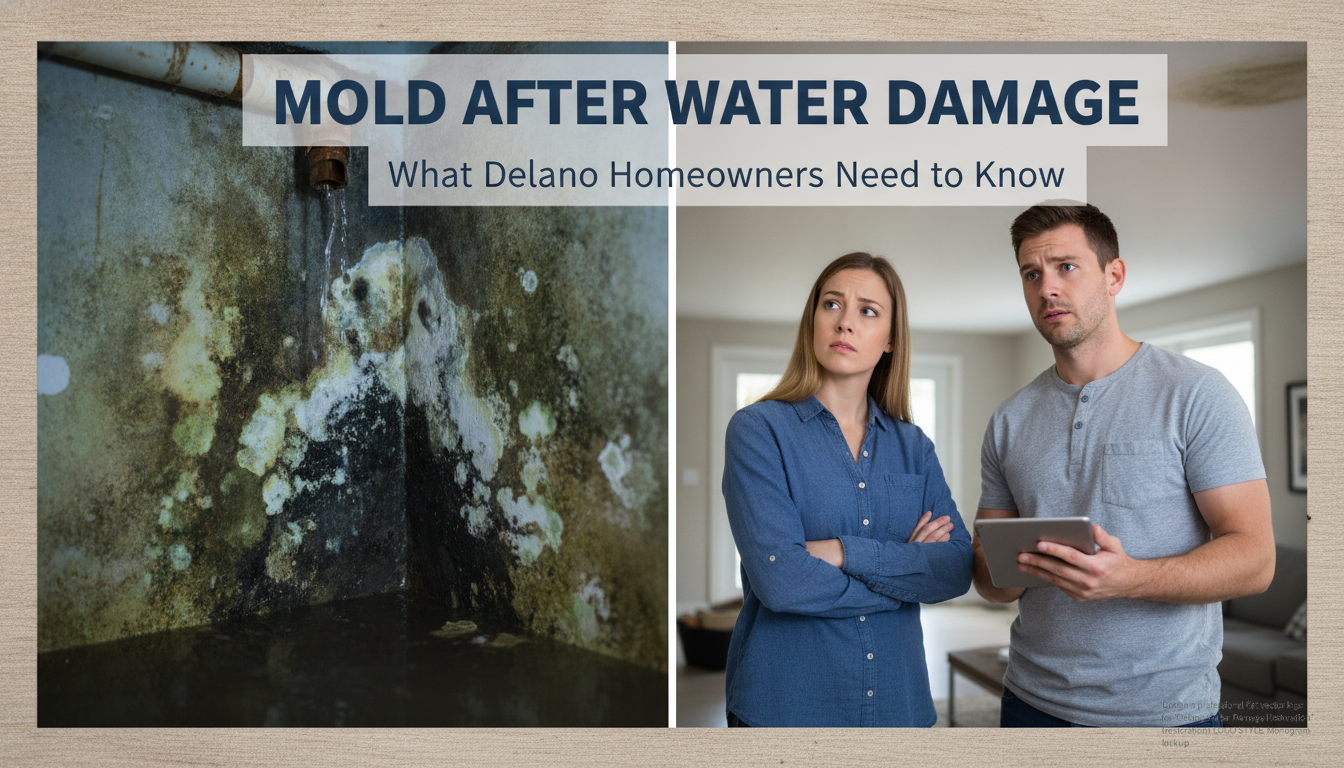
Water damage that is not thoroughly dried within the first 24 to 48 hours almost always leads to mold. In Delano and throughout the San Joaquin Valley, warm ambient temperatures combine with hidden moisture in wall cavities, crawl spaces, and subfloor assemblies to create ideal conditions for mold colonization — even in the dry summer months when the outdoor air feels arid. Mold is not just a cosmetic problem: it degrades structural materials, triggers respiratory issues and allergies, and can render parts of a home uninhabitable if left untreated long enough.
Understanding how mold develops, where it typically hides in Kern County homes, and what professional remediation actually involves can help Delano homeowners make faster, better decisions after any water intrusion event.
How Quickly Does Mold Develop After Water Damage?
Mold spores are always present in indoor and outdoor air at low levels. Under normal conditions, they are harmless. When a surface becomes wet and stays wet, those spores have everything they need to germinate and grow. Research and industry standards consistently put the window for mold initiation at 24 to 48 hours of sustained moisture — which is why the IICRC S500 Standard for Professional Water Damage Restoration treats rapid drying as a priority, not a preference.
The growth rate after colonization begins depends on temperature, relative humidity, and the type of material being colonized. Drywall paper backing, wood framing, and insulation batts are particularly hospitable because they are organic, porous, and often retain moisture long after adjacent surfaces feel dry. A wall cavity that looks fine from the outside can be actively growing mold inside within days of a water intrusion if the source was not found and dried promptly.
Where Mold Hides in Delano Homes
Delano's housing stock includes a mix of older ranch-style homes built on raised foundations and newer construction on slab. Each building type has characteristic locations where moisture accumulates and mold colonizes:
- Crawl spaces beneath raised foundation homes: Ground moisture, plumbing drips, and condensation from temperature differentials create persistently humid conditions under the floor. Exposed wood joists and subfloor decking are prime targets. Our crawl space drying and encapsulation service addresses this specific vulnerability.
- Wall cavities behind kitchen and bathroom fixtures: Slow leaks at supply line connections, drain P-traps, and dishwasher hoses can drip inside wall assemblies for months before becoming visible, feeding mold colonies that span multiple wall bays.
- Attic spaces near evaporative cooler penetrations: Evaporative coolers — common in Kern County — introduce high-humidity air into attic spaces and can create condensation on roof sheathing when not properly sealed.
- Under flooring systems: Vinyl, laminate, and hardwood flooring trap moisture against subfloor decking when water intrudes from below or seeps under the edges after a spill or leak. Mold on the underside of flooring is invisible until the floor is removed.
- HVAC ducts and air handler compartments: Mold inside a duct system is distributed to every room each time the system runs — making HVAC mold disproportionately impactful on indoor air quality relative to its physical size.
The Difference Between Mold Cleanup and Professional Mold Remediation
Surface mold on a bathroom tile grout line can be cleaned with household products. But mold inside a wall cavity, under a floor system, or in a crawl space is an entirely different situation that requires professional mold remediation following IICRC S520 protocols.
Professional remediation involves more than scrubbing visible growth. The process includes:
- Comprehensive moisture mapping: Using thermal imaging cameras and pin-type moisture meters to locate every moisture pocket — not just the areas showing visible mold — before any removal begins.
- Containment with negative air pressure: Establishing polyethylene sheeting barriers around the work area and running HEPA-filtered negative air machines to prevent spores from spreading to unaffected rooms during disturbance of colonized materials.
- Selective material removal: Porous materials like drywall and insulation that have been colonized are carefully removed, sealed in poly bags, and properly disposed of. Non-porous materials are HEPA-vacuumed and treated with EPA-registered antimicrobials.
- Air scrubbing and post-remediation clearance: Air scrubbers with HEPA filtration run throughout the project and for a post-remediation period. A final inspection — and third-party air sampling where appropriate — confirms spore counts have returned to normal background levels before containment is removed.
Attempting to seal over or paint over mold without following these steps does not eliminate the hazard — it delays and usually worsens the outcome.
What Happens If Mold Is Left Untreated?
Untreated mold colonies continue growing as long as a moisture source remains available. Over time, structural consequences escalate:
- Wood framing loses structural integrity as mold and associated fungal rot break down cellulose fibers
- Drywall softens and crumbles, requiring full replacement of entire wall sections rather than targeted patches
- Mold spores infiltrate HVAC systems and spread throughout the structure, dramatically expanding the remediation scope
- Occupant health impacts — respiratory irritation, allergic reactions, and in sensitive individuals more serious effects — accumulate with prolonged exposure
- Property value and insurability can be affected, particularly when mold must be disclosed in real-estate transactions
How Mold Remediation and Water Damage Restoration Work Together
Mold cannot be permanently resolved without addressing the underlying moisture source. This is why Delano Water Damage Restoration integrates its water damage restoration and mold remediation services closely — remediating mold in a structure that still has an active moisture problem simply creates the conditions for recurrence.
Every mold remediation project we conduct begins with identifying the moisture source. Whether it was a one-time pipe burst that was not thoroughly dried, an ongoing slow leak, or persistent crawl space moisture from ground vapor, that source is documented and must be resolved before the remediated area is rebuilt. Our documentation also supports insurance claims and real-estate disclosures when applicable.
If your water loss involved sewage backup, the mold risk is compounded by biological contamination. Our sewage cleanup protocol includes mold monitoring as a follow-up step in all Category 3 losses precisely because the warm, moist conditions after a sewage event are among the most accelerated environments for mold initiation.
Serving Delano and Surrounding Communities for Mold Remediation
Delano Water Damage Restoration provides mold remediation services throughout Delano and the surrounding area, including McFarland, Earlimart, Pond, and
Call +16616698320 or fill out our online form for a free, no-obligation quote.Confirm Availability